
How to appreciate the pottery
Published on June 23, 2026
The ceramic products available in our shop are handcrafted one by one by artisans, giving each piece its own unique character.
From irregular shapes and variations in glaze intensity to distinct surface patterns, even products of the same type have subtle differences. No two pieces are exactly alike. The unique individuality of each vessel is a major charm of handcrafted work.
In this guide, we would like to introduce several characteristics commonly found in handmade ceramics. We hope you will enjoy each of them as part of the unique character of the product.
Individual Differences
Vessels made by hand have subtle differences in shape, size, and weight from one piece to another. The dimensions and weights listed on the product pages are approximate guidelines, and actual products may differ by around ±10%.
These differences are the "individuality" bestowed upon the vessels by handwork. This organic variation, which cannot be found in mass production by machines, allows you to feel the artisan's breath.
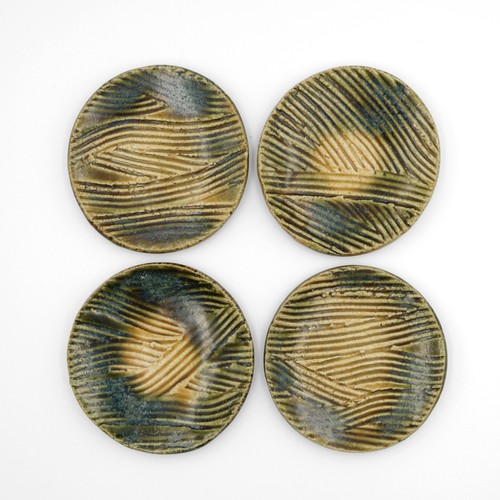
These Mame-zara plates have different patterns, as each piece is handcrafted.
Glaze
The application of the glaze, the intensity of the color, and the drip marks vary with each individual piece.
This is a natural phenomenon called "Yohen" (Kiln transformations), which is caused by conditions inside the kiln, such as how the flames hit the piece, the temperature, and the amount of oxygen. Even when using the same clay and glaze, the finish will be completely different depending on where the piece is placed inside the kiln.
The one-of-a-kind "landscape" created by Yohen has been enjoyed since ancient times as one of the greatest charms of ceramics.
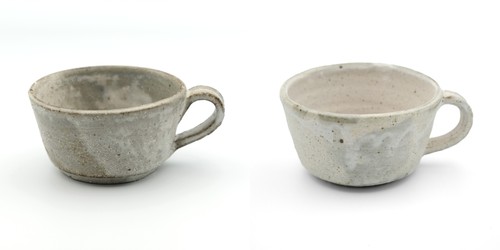
These cups are from the same collection. Due to variations in glaze thickness and flame contact during firing, each piece develops its own unique character—some more grayish, and others more whitish.
Kannyu (Crazing)
Kannyu refers to the fine, crack-like patterns visible on the surface. This is a characteristic unique to ceramics, caused by the difference in shrinkage between the clay body and the glaze during firing. It is entirely different from cracks caused by impact and does not mean the body is broken or damaged.
As you use the vessel, colors will gradually seep into the lines, making them more pronounced. You can enjoy the way the vessel beautifully matures over time.
Kairagi (Crackled effect)
Products with Shino glaze may develop a textured, beaded crackle pattern called Kairagi. Similar to Kannyu, this phenomenon is caused by the difference in shrinkage between the clay body and the glaze during firing, and it is a characteristic unique to Shino ware.
With repeated use, colors will seep into the crackle patterns. Products with Kairagi allow you to "nurture the vessel" into a more seasoned and mature character.
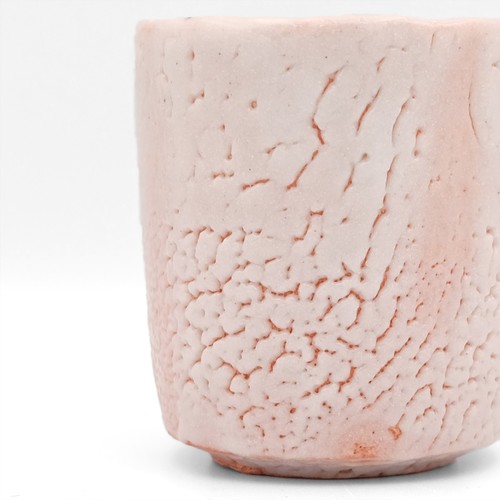
This tea cup has a beautiful Kairagi.
Pinholes
Small, needle-like holes may sometimes be seen on the surface of the glaze.
This phenomenon is called a "pinhole," and it occurs when air bubbles or organic matter contained in the clay or glaze escape as gas during firing, leaving a mark.
This is a natural phenomenon due to the inherent nature of ceramics and does not affect its use.
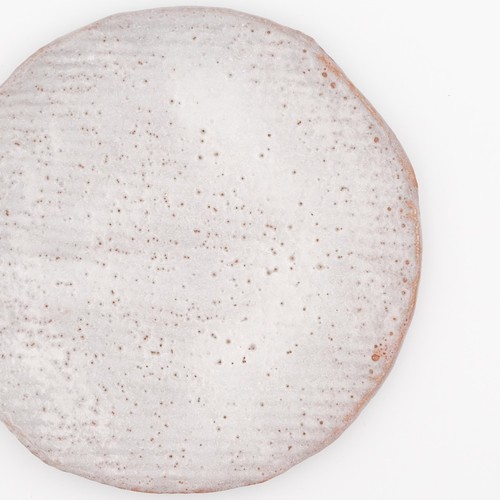
This is the surface of a plate with pinholes. The unique patterns are created by the breath of the clay body and/or the glaze.
Iron Spots
Iron contained in the clay or glaze may appear as black dots on the surface of the vessel.
These black dots are called "iron spots," a texture unique to natural materials crafted by hand.
They are often seen in Kohiki glaze and other styles, adding unique character to the vessel.
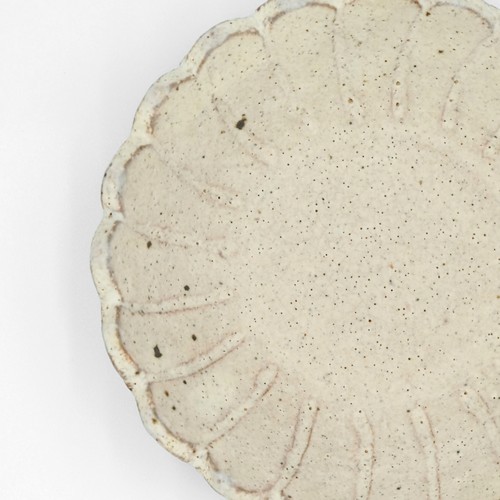
The small black dots visible on the left side, near the edge of the piece, are iron spots. These patterns are a creation of chance.
We hope this guide helps you appreciate the unique expressions and individuality inherent in handmade ceramics.
We also hope you will enjoy the beautiful way the vessel matures through long-term use.
If you have any questions or inquiries about the items available in our shop or about the artisans, please feel free to let us know. We would be delighted to assist you.